


Putin decoy planes have turned an everyday diplomatic flight into a global game of hide and seek, and his most recent visit to India illustrated how far Russia will go to keep its president invisible in the sky. For more than six hours, two virtually identical Russian government planes criss-crossed radar screens across the world, turning their transponders on and off while nearly 20,000 people tried to discern which one actually flew Vladimir Putin to New Delhi.
What Are Putin Decoy Planes?
The Putin decoy planes are all but identical Russian government jets that fly the same route at the same time to hide which plane President Putin is actually traveling in. They were dubbed “separators” after two long‑range Ilyushin aircraft were detected flying towards New Delhi at the time of a previous visit to India, and could accommodate carrying the Russian leader, broadcasting intermittent signals. This was a deliberate doubling up that became a cloud of confusion not even real‑time flight tracking systems could penetrate.
The Putin decoy planes strategy is all about confusion by design. One aircraft would flip on its transponder device; the other would turn off its own; then they’d throw their toggles in reverse so no one could ever be entirely sure which radar dot was the real “Flying Kremlin.” One of the Putin decoy planes didn’t get to Delhi till after his arrival had morphed from the official schedule into India fact, and by then the world had a new photograph but still no way of proving which craft that president had disembarked from.
Why Putin Decoy Planes Matter For Safety
Putin decoy planes mean more than just a clever bit of aviation skullduggery; they are the central plank in Russia’s high‑risk travel security doctrine. Today’s heads of state also face threats that include drones, surface‑to‑air missiles, electronic tracking and hacks to their planes’ systems — all rendered vastly more difficult by the use of decoy aircraft and the uncertainty those decoys create about which plane is the right one, at a time of an adversary’s choosing.
The Putin fake planes strategy is successful because everything must be accurate in such a scenario of attack. For one, if adversaries could not consistently tell which plane the president is on and when it will traverse a particular stretch of airspace, let alone where he would land, their odds of a successful strike are substantially diminished. By multiplying possibilities and moving visible signals around all the time, Russia makes any potential attacker play a guessing game with odds rigged against hitting on the right combination of Russian moves.
Inside The “Flying Kremlin”
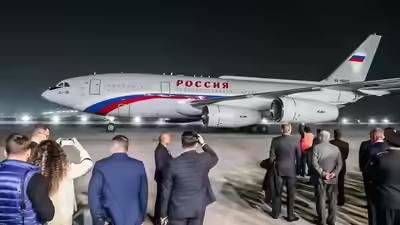
While both Putin decoy planes might appear similar from the ground or on tracking maps, one of them typically acts as the actual presidential aircraft commonly called the “Flying Kremlin.” This jet is an extensively remodeled Ilyushin IL‑96‑300PU with special communication equipment, encrypted control and communications systems and advanced short range air defense (including jamming capabilities) under the designation Il-96VKP as a flying command post.
The “Flying Kremlin” is said to be equipped with radar‑jamming gear and anti‑missile defenses that can jam hostile targeting and protect it from at least some types of guided weapons, according to reports. When ta place decoy planes are active, these screen out the confusion generated by shared flightpaths and alternating transponder signals creating both physical and informational shields around the president.
How The Transponder “Hide‑And‑Seek” Works
The most intriguing aspect of the Putin decoy planes story is how these transponders were employed as switches in a digital game of shells. Aircraft transponders transmit altitude, speed and position to air traffic control facilities and public destinations like FlightRadar24, transforming anonymous jets into visible icons on a digital map.
But something odd happened with both Putin decoy planes on the India trip: sometimes one was visible and sometimes two, and then they would swap who was getting shown. That meant not even the most expert of aviation spotters could say with certainty which signal corresponded to the president’s actual jet at any given point. The alternating signals formed a moving puzzle that was streamed live online throughout, watched by thousands of people who couldn’t solve it.
Why Use Two of the Same Putin Doppelganger Planes?
There are three primary reasons Russia uses two identical Putin doppelgänger aircraft, when on even the most delicate foreign visits.
First, redundancy: if one plane develops a technical problem, the mission can be continued immediately with the second jet without an unwanted change of plans.
Second, deception: identical silhouettes, matched liveries and synchronized routes mean satellite imagery, radar surveillance and public trackers all see two plausible targets for a presidential assassination.
Third, unpredictability: That secret could be kept until long after the plane lands. “None but the few in a hard inner circle within Putin’s security team can know which of the decoy planes he is actually onboard,” Tait wrote.
This system emulates the long‑standing practices of other powerful states. Most countries, meanwhile, resort to decoy convoys, switched motorcades or shadow aircraft when their leaders are traveling in hostile or contested areas. So-called Putin decoy planes are just one of the flashiest and most high-tech incarnations of this pattern playing out around the world.
The 20,000 Online Trackers Tracking My Personal Life And Putin Decoy Planes

Putin decoy planes not only deceived would‑be enemies; they made the internet itself an audience to a live thriller. One of the Russian government planes bound for India ended up becoming Earth’s most‑tracked flight, with over 20,000 people watching its little icon crawl toward New Delhi, Flight Radar 24 reported.
The fact that there were two Putin dummies in airplanes made the whole thing even more cinematic. One second, viewers could make out a clear track; the next, that familiar dot was gone and replaced by another, further firewood for speculation, for social media threads and viral clips canvassing each turn or altitude change. The result was an unusual hybrid between hardcore security practice and mass online entertainment, at which state secrecy and public curiosity crashed head on in real time.
All ones I couldn’t imagine anyone getting from MW–I mean Russia were Putin Decoy Planes Multi‑Layered Protocols
Putin decoy planes are only the most visible part of a larger, nearly obsessive security ecosystem that shadows the Russian president abroad. On the ground, he is greeted by an armored limousine, the Aurus Senat, teams of heavily trained bodyguards and meticulously controlled motorcade routes that are frequently modified at short notice.
There are also less apparent ones. News accounts tell of Russia importing its own systems for communications, medical teams and even techniques to ensure that no biological samples are left behind — evidence of how determinedly the system is structured to manage every variable. Seen collectively, Putin decoy planes would be a feature of a philosophy that assumes adversaries are everywhere and that all potential gaps should be closed.
How Putin’s Decoy Planes Stack Up Against Other Leaders’ Travel
Putin decoy planes are outlandish, but not entirely unprecedented in concept. The United States has long relied on layered systems around Air Force One, which have included aircraft close by for support, airborne command posts and careful secrecy about specific routes and timing. Other states with nuclear weapons similarly rely on these dispersal measures, harden their own jets and have similar deception plans for their leaders when flying over hazardous areas.
The appeal of Putin decoy planes is in the visibility and drama. Most governments seek to shield their leader’s flight path from public gaze, and the India trip became a public circus precisely because the Indian decoy game was played out on global tracking platforms. That combination of secrecy and spectacle has made the “Flying Kremlin” a security asset, and an online legend.
Why Putin Decoy Planes Will Be So Important
Geopolitical tensions, long‑range weapons and open‑source intelligence tools together make air travel one of the riskiest environments for a head of state — and Putin decoy planes serve directly to mitigate that risk. The Ideal Facts in a World of Encrypted Convictions Here is the thing: In an age when more people have access to satellite imagery, public radar and sophisticated analytics than ever before, leaders can’t just bank on obscurity; they’ll need to actively distort information signals if they want to survive.
And Putin decoy planes do precisely that. By cloning flight paths, confounding trackers and burying truths under plausible lies, they reintroduce doubt to a world that expects all certainties all the time. So long as Russia believes its president to be a high‑value target, this two‑plane approach is likely to remain a central and highly visible feature of his overseas travel playbook. one.